Loading...
Serving Huntington, WV and surrounding areas. (304) 802-8567
Huntington's hilly terrain and clay soils require foundation work done by people who know this ground. We handle excavation, forming, pouring, drainage, and permits.
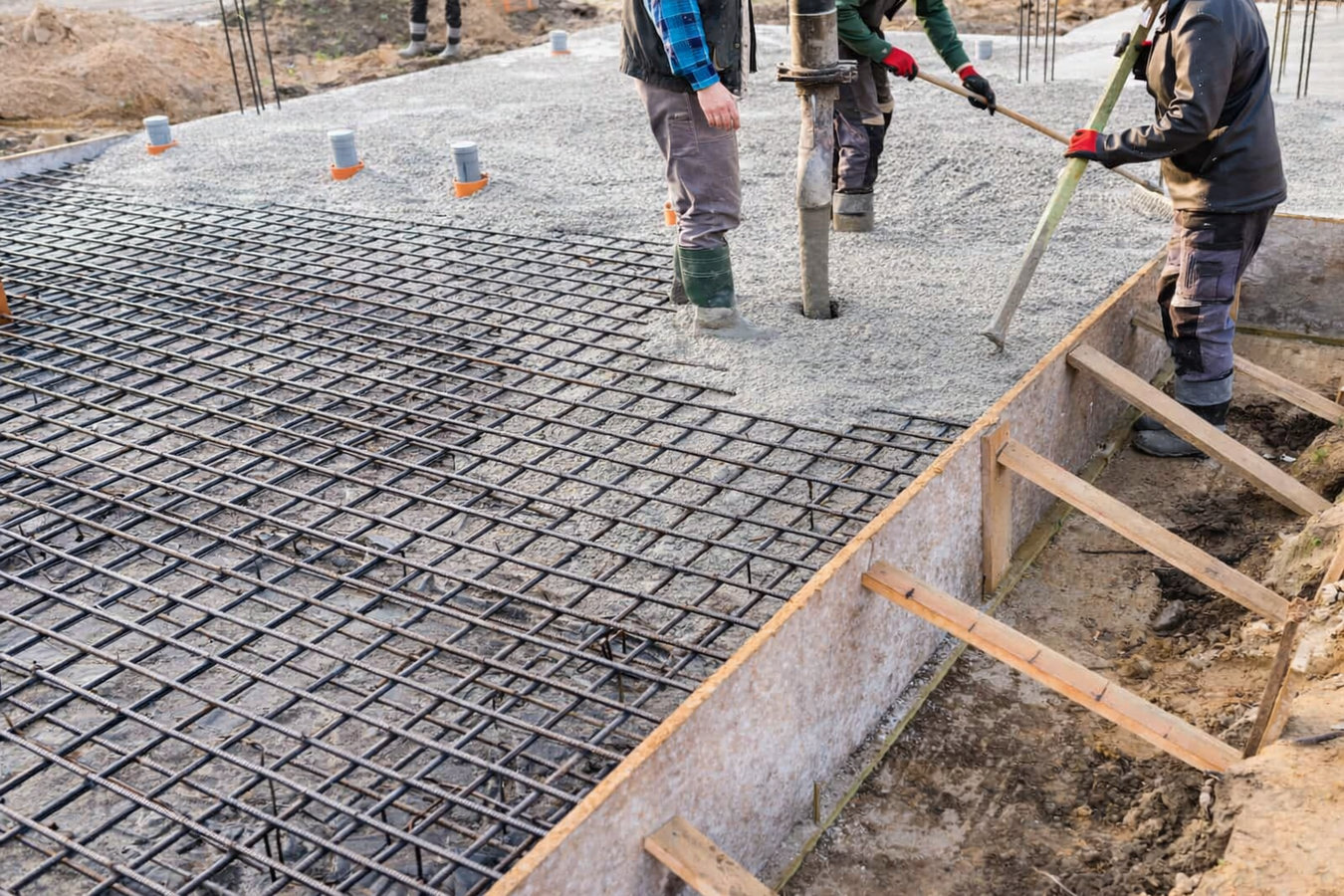
Foundation installation in Huntington covers the full process from excavation to curing - digging to the right depth, setting forms, placing reinforcement, pouring concrete, waterproofing, and directing drainage away from the structure. Active work typically takes three to seven days, with concrete reaching full strength around 28 days after the pour.
Whether you are installing a poured concrete wall foundation for a new home or a slab under an addition, the outcome depends almost entirely on the prep work - grading the site, reading the soil, and building in drainage from the start. Huntington's combination of hillside terrain, clay-heavy soil, and high annual rainfall makes every one of those steps matter more than in most places. If your project calls for a flat slab rather than a full foundation with walls, our slab foundation building service covers that scope directly.
We pull the required City of Huntington building permits and schedule all inspections as part of the job. You should not have to figure out the Building Inspection Division process on your own - and the inspection that happens before the pour is a genuine protection for you, not just a formality.
Cracks that angle out from the corners of door frames or window openings often signal that the foundation beneath that part of the house has shifted or settled. In Huntington's hillside neighborhoods, soil movement on sloped lots is a common cause. These cracks tend to get wider over time if the underlying issue is not addressed.
When a foundation moves, the frame of the house moves with it, and that shows up first in doors and windows that used to open easily but now stick, drag, or leave gaps. This is especially common in older Huntington homes after a wet winter, when clay-heavy soil has swelled and then dried out. If several doors or windows in the same area are giving trouble at once, it is worth having someone look at the foundation.
Huntington's high annual rainfall means water intrusion is a real and common problem. If you find standing water, damp walls, or a musty smell in your basement after heavy rain, the foundation's drainage system may be failing - or may never have been properly installed. Left alone, this leads to mold, wood rot, and eventually structural damage.
Stand in your basement and look along the walls. If any wall appears to be curving inward or leaning rather than standing straight, that is a serious warning sign. Soil pressure from Huntington's wet, clay-heavy ground can push against foundation walls over time, especially in older homes where the original concrete has weakened. This is not a problem that improves on its own.
Our foundation installation work covers the full scope - site assessment, excavation, gravel base, form setting, steel reinforcement, concrete pour, waterproofing, and drainage. Every foundation we install is designed around the specific conditions of your Huntington lot: the slope, the soil, the access for equipment, and what you are building on top of it. We do not quote flat-ground prices for hillside lots and then adjust after the dig starts.
For properties that also need supporting structures, we offer concrete parking lot building for commercial sites and driveways that connect to foundation work, as well as slab foundation building for single-story projects where a full basement or crawl space is not needed. Both services can be scoped together or separately depending on what your project requires.
Best for new homes and major additions requiring a basement or full-height crawl space with solid concrete walls.
Suited for single-story additions and outbuildings where a crawl space or basement is not needed.
Designed for Huntington's sloped lots where excavation must account for uneven terrain and soil support on multiple sides.
Ideal for older Huntington homes where the original foundation has settled, cracked, or no longer meets current load requirements.
Huntington sits along the Ohio River surrounded by the foothills of the Appalachian Plateau, which means many residential lots slope significantly or have irregular grades. On a hillside, excavation takes longer, requires heavier equipment, and sometimes involves shoring up the surrounding soil so it does not shift during the dig. A large share of Huntington's homes were built between the 1920s and 1960s, and if you are replacing or repairing a foundation on an older home, your contractor may find outdated materials, previous patch repairs, or footings that do not meet current standards. We have worked on properties throughout Ironton and Barboursville and understand how conditions vary across this region.
Huntington averages around 43 inches of rain per year, and the Ohio River Valley's clay-heavy soils hold moisture for extended periods. Wet, saturated soil is harder to excavate cleanly, can cause forms to shift during a pour, and increases the risk of water problems if drainage is not built into the foundation design from the start - not treated as an add-on after the concrete sets. Drainage is not an upgrade here; it is a basic requirement for a foundation that holds up in this climate. We also follow West Virginia's requirement to call 811 before any excavation so buried utility lines are located before a shovel touches the ground.
We ask what you are building, the size of the area, and whether you have had a soil assessment done. Then we schedule a site visit because in Huntington's varied terrain, a phone quote is rarely accurate. Expect a 30-to-60-minute walk-through. We reply within one business day of your initial contact.
Before any digging starts we assess your lot - checking slope, soil conditions, and equipment access. We also pull the required building permit from the City of Huntington's Building Inspection Division on your behalf. Permit approval can take a week or two depending on the city's current workload, so we factor that into your project timeline from the start.
The crew digs out the area to the required depth, levels the base, installs forms, and places drainage gravel and drain pipes before the pour. On a hillside lot this step takes longer and requires more equipment than on flat ground. We call 811 before any excavation to locate buried utility lines - required by state law and good practice.
A concrete truck arrives and the crew pours, spreads, and levels the concrete. The city inspector visits at or shortly after this stage. Once the inspection passes, forms come off after a few days, and we clean up the site - removing forms, excess material, and equipment. Your contractor will tell you when it is safe to build on top of the finished foundation.
Every lot in this area is different. We come look at yours and give you a real number based on your actual slope, soil, and access - not a flat-ground guess.
(304) 802-8567Huntington's sloped terrain is genuinely different from flat-ground cities. We have worked on hillside lots throughout the Tri-State area and quote based on what we see at your property, not a flat-ground assumption. That means your estimate does not balloon once the excavator arrives.
Huntington averages around 43 inches of rain per year, and a foundation installed without proper drainage is a problem waiting to happen. We design drainage into every foundation from the start - gravel, drain tile, and grading - so water moves away from your home instead of pooling against it.
Many Huntington foundations were built before 1970 using materials and methods that differ from current standards. We assess existing conditions carefully before committing to a price, and if we find surprises under the surface, we tell you before work starts - not after.
We handle the City of Huntington's building permit process start to finish and schedule all required inspections. That means your project is on the record, the work has been independently checked, and your home's history is clean when you sell or refinance. Verifying a contractor's license through the West Virginia Division of Labor is a 30-second check that filters out unlicensed operators.
These are not marketing claims - they are the practices that keep a foundation from failing in Huntington's specific conditions. You can verify contractor licensing through the West Virginia Division of Labor, and the National Ready Mixed Concrete Association sets the quality standards for the concrete mixes we use on every foundation pour.
Concrete parking lots and commercial paving that ties directly into site work and foundation projects across Huntington.
Learn MoreResidential and outbuilding slab pours for projects where a full poured-wall foundation is more than the scope requires.
Learn MoreSpring and summer fill up fast in Huntington - reach out now, and we will lock in your project date, handle your permit, and give you a written on-site estimate before any work begins.