Loading...
Serving Huntington, WV and surrounding areas. (304) 802-8567
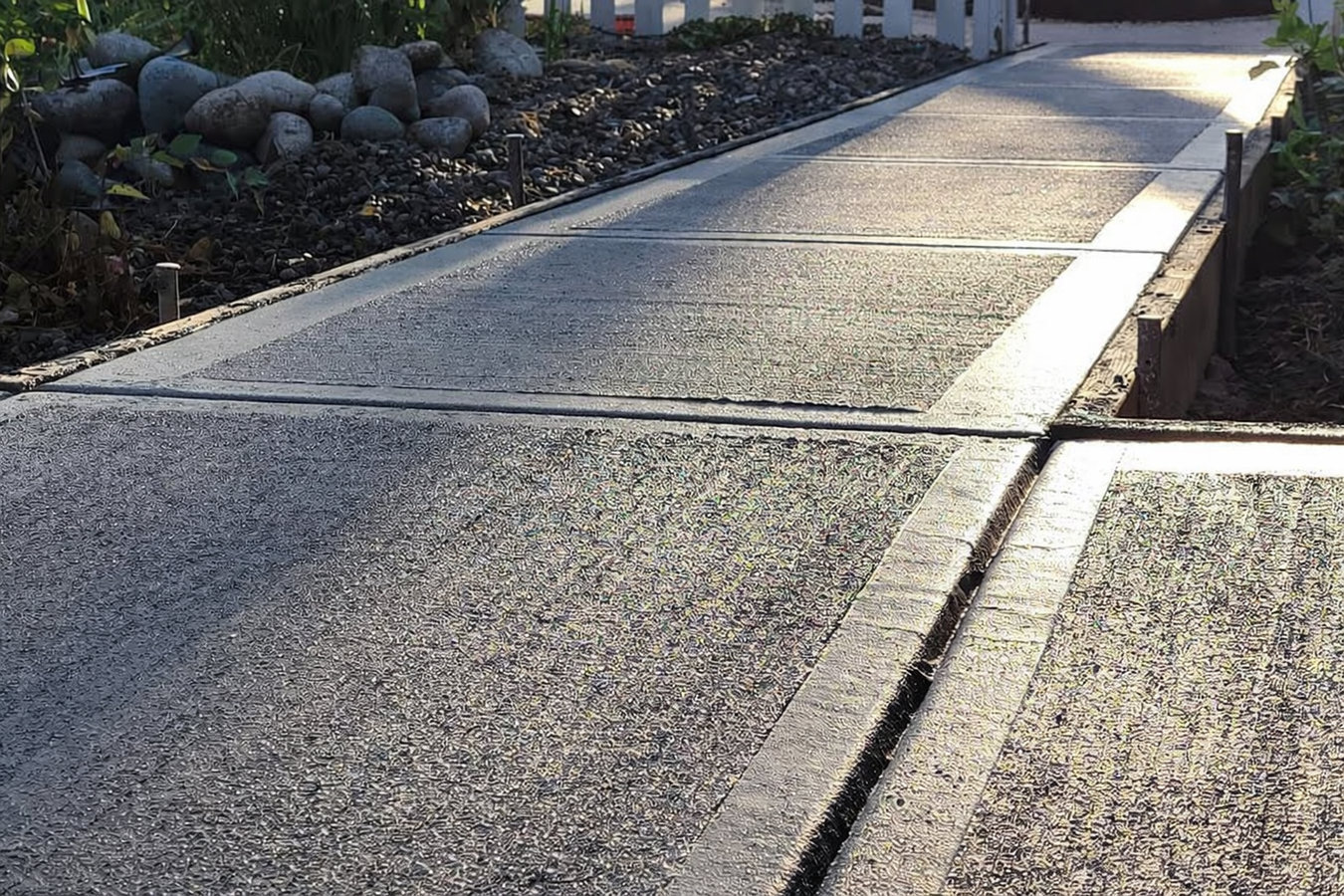
A cracked or uneven sidewalk is a safety hazard and a headache every winter. We build concrete sidewalks in Huntington from the ground up - base prep, the pour, permits, and cleanup all handled for you.
Concrete sidewalk building in Huntington, WV means removing whatever is there now, preparing a stable base underneath, and pouring fresh concrete that hardens into a long-lasting surface, most residential jobs take one to two days of active work plus 24 to 48 hours before you can walk on it. What you are paying for is mostly labor - the preparation underneath is what determines whether the sidewalk holds up for 30 years or starts cracking in five.
Huntington homeowners most often call us for replacement work on old, cracked, or heaved sidewalks rather than brand-new installs - which makes sense given that most of the city neighborhoods were built in the early to mid-20th century. If the sidewalk connects to a public street, a city permit is usually required, and we handle that process for you so you are not navigating paperwork on your own. For homeowners also thinking about their driveway, our concrete driveway building service follows the same standards of base prep and drainage design.
The visible surface is the last thing that happens. A proper pour starts with graded soil, a compacted gravel sub-base, correctly placed forms, and control joints spaced to give the concrete somewhere to move when temperatures shift. Skipping those steps is the reason so many Huntington sidewalks crack within a few years of being replaced.
If you can spot cracks while standing at the curb, they are past the point of simple patching. Cracks wider than a quarter inch, or cracks running all the way across a panel, mean the slab has moved and will keep moving. Patching only hides the problem for a season or two before it opens back up.
When one panel sits noticeably higher or lower than the section next to it, that is a trip hazard. In Huntington, heaved panels are often caused by valley soil shifting or tree roots pushing up from below. A raised edge of even half an inch is enough to catch a foot, and homeowners can face liability for injuries on sidewalks that front their property.
A sidewalk that holds water after a rainstorm is either sloped the wrong way or has settled unevenly. Huntington averages around 43 inches of rain per year, and water sitting on or against your walkway will work its way into every small crack - and then freeze in winter, making those cracks significantly worse.
If the top layer is peeling off in thin chips or the surface looks rough and pitted, the concrete has started to deteriorate from the inside out. This is especially common on older Huntington sidewalks that predate modern mix standards and have been through decades of freeze-thaw winters. Once spalling begins, replacement is more practical than repeated patching.
We handle the full scope: permit pulling with the City of Huntington when required, demolition and haul-away of old concrete, base preparation, forming, the pour, finishing, and cleanup. Everything is included in the written quote we give you before a single shovel goes in. We also address tree root situations before installation begins - not after - because roots near the walk need a plan, not an assumption that they will not cause problems later. The International Society of Arboriculture recommends addressing root conflicts before installation rather than cutting roots during the pour, which can destabilize the tree. For homeowners who want to tie a new sidewalk into a larger project, our garage floor concrete work uses the same approach to base prep and joint placement, so everything is built to the same standard.
Every sidewalk we pour is finished with a slight cross-slope so water drains away from the house rather than sitting against the foundation. The U.S. Access Board ADA guidelines set standards for pedestrian surface slope and continuity that we follow on any sidewalk connecting to a public right-of-way. We also provide guidance on long-term care - when to seal, how to clean, what to avoid - so the surface you invest in holds up the way it should over the decades.
The right choice for cracked, heaved, or spalling walks where patching has already failed or where the base underneath was never properly prepared.
Suited to homeowners adding a path where none existed - from a driveway to a side door, across a yard to a back gate, or connecting a new patio to the street.
For sidewalks along city streets that connect to public property - we pull the required permits and ensure the work meets Huntington city standards for width, slope, and finish.
For properties with mature trees near the planned walk, we assess root zones and recommend routing or barrier options before the pour - not after the roots have already pushed the new slab up.
Huntington neighborhoods like Westmoreland, Highlawn, and Guyandotte were largely built out in the early to mid-20th century, which means most sidewalk projects here involve pulling out old concrete rather than pouring on bare ground. That demo and haul-away adds to the timeline and cost, and it is sometimes priced separately by contractors who do not mention it upfront. We include it in the written quote every time. The soil in much of the Ohio River valley - including lower-lying parts of Huntington - can be soft or poorly drained, which means base preparation matters more here than in areas built on firm, well-draining ground. Homeowners in Ashland, KY across the river face similar river valley soil conditions, and we bring the same preparation standards to every job across the Tri-State area.
The freeze-thaw cycle that Huntington gets through December, January, and February is harder on concrete than a steady deep freeze. Temperatures swing above and below 32 degrees repeatedly, which drives water into small cracks, freezes it, expands it, and repeats. Properly spaced control joints and correct drainage slope are the two things that make the biggest difference in how long a sidewalk holds up through those conditions. Homeowners in Barboursville and other Cabell County communities deal with the same climate, and the same attention to joint placement and drainage applies whether the job is in the city or nearby.
We ask a few basic questions and schedule a site visit - because the condition of the ground and equipment access can change the cost significantly. You get a written price that covers demo, base prep, the pour, permits, and cleanup. We respond within one business day.
If your project requires a City of Huntington permit - common for sidewalks along public streets - we pull it before the crew shows up. Permit processing typically adds a few days to a week to the start date, so we factor that into the timeline upfront.
Old concrete is removed and hauled away first. Then the ground is graded, compacted, and sometimes covered with a gravel layer. Forms go in, the concrete is poured, control joints are cut at correct intervals, and the surface is finished with the right texture and slope. Cleanup happens before we leave.
You can walk on the new surface after 24 to 48 hours, but keep vehicles off for at least a week. We walk the finished sidewalk with you before calling the job done, address any concerns on the spot, and leave you with plain-language guidance on sealing and long-term care.
Free on-site estimate. Written quote covers everything. We respond within one business day.
(304) 802-8567Many contractors quote the pour and leave demolition as a separate surprise. Most Huntington replacement jobs involve breaking out old concrete, and we include that cost in the written quote before you agree to anything. The number we give you at the estimate is the number you pay.
Huntington sits on Ohio River valley soil that can be soft, poorly drained, or prone to shifting - conditions that are harder on concrete than firm, well-draining ground. We spend more time on base compaction than contractors who are not familiar with local soil, because that work is what keeps a sidewalk level for decades rather than shifting within a few seasons.
Sidewalks along public streets in Huntington require city permits, and work done without them can mean fines or having to redo the job. We know which projects need sign-off from the City of Huntington and handle that process before any crew arrives on site.
The repeated freeze-thaw cycles Huntington gets through winter make correct control joint spacing more important here than in warmer climates. We cut joints at intervals suited to the slab size and local conditions so the concrete has a planned place to move - rather than cracking randomly across the surface when temperatures swing.
A sidewalk looks simple from the street, but the base preparation and joint placement underneath are what determine whether it holds up or starts cracking within a few seasons. We take both seriously on every job, regardless of size.
Apply the same base prep and joint placement standards from sidewalk work to a new or replaced garage floor.
Learn MorePair a new sidewalk with a driveway replacement that uses the same drainage planning and freeze-thaw rated mix.
Learn MoreSpring and fall booking windows fill quickly. Reach out now to lock in your project date and get a written quote before the busy season arrives.